


Nourish Nantucket and the Land Bank to House the Food Pantry
It started as a Nantucket Elementary School class project in the spring of 1989. A group of children had heard stories of island families going to bed hungry, so they started a food drive, providing nonperishable goods to what was then a makeshift pantry in the basement of St. Paul’s Church. It was the first time the basement pantry accepted food outside of the holidays. It was also a wakeup call. Two years later, the Food Pantry had its own building.
In the three dozen years since that initial food drive, hunger on Nantucket has climbed dramatically. In 2023, an estimated 21% of year-round residents struggled to put food on the table, while 46% of Nantucket Public Schools students qualify for free and reduced school lunches. A new report from the Greater Boston Food Bank found 34% of households across the Cape and islands struggled with food insecurity in 2024, a 14% increase from just one year earlier.
The Food Pantry has become the most pivotal food provider but its lease with the town was set to expire and finding a new home became critical. Thanks to a collaboration between the Land Bank and Nourish Nantucket, the hunt for a new food pantry is now over, a critical step in solving the island’s food insecurity crisis. “Because of the space limitations of where [the pantry] is now, because the building is so small and their storage capacity is so small, they can only accept a certain amount of donations at a time before they have to get it out the door,” Nourish Nantucket Executive Director Meg Browers said.
-
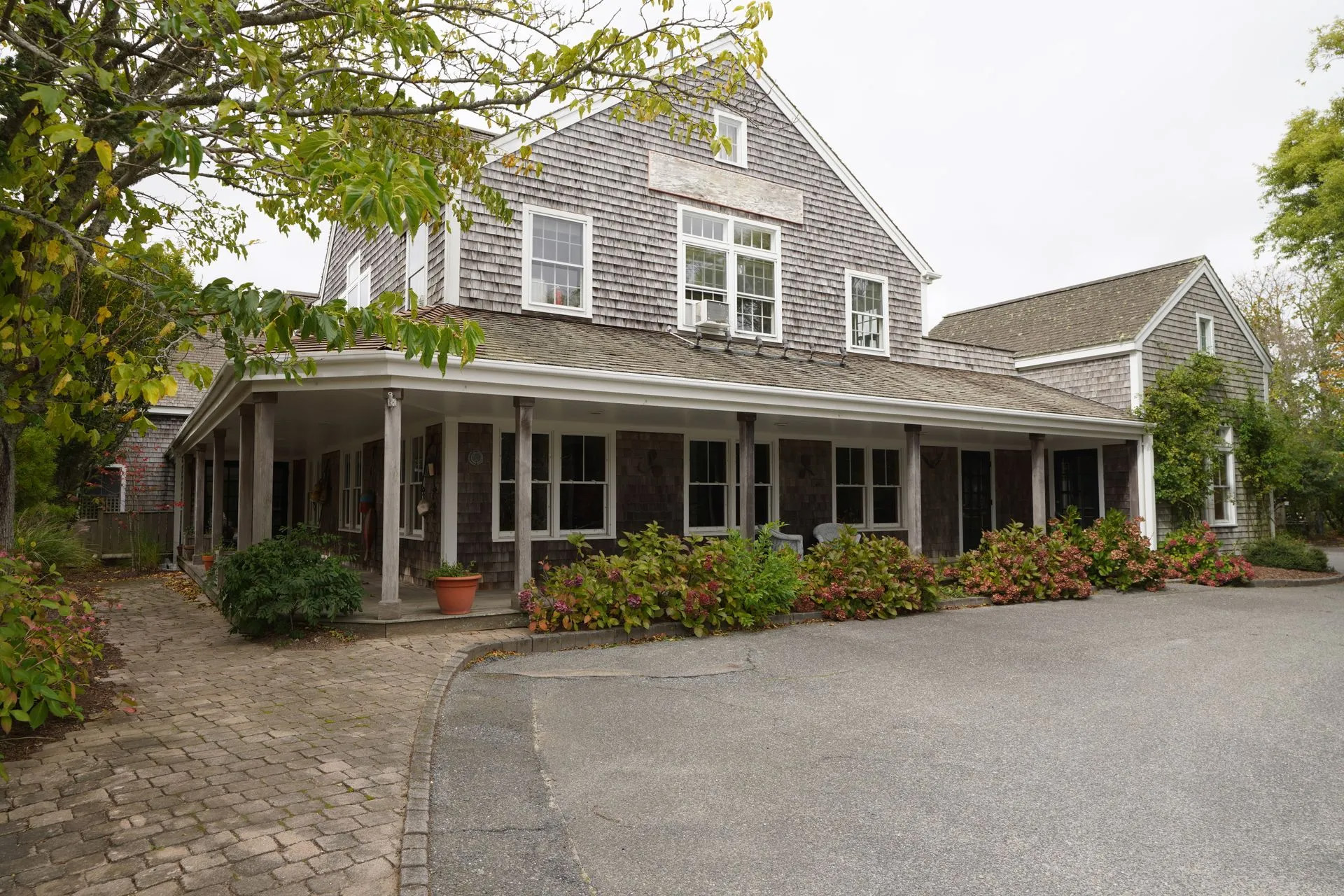
- The new home of the Food Pantry.
-
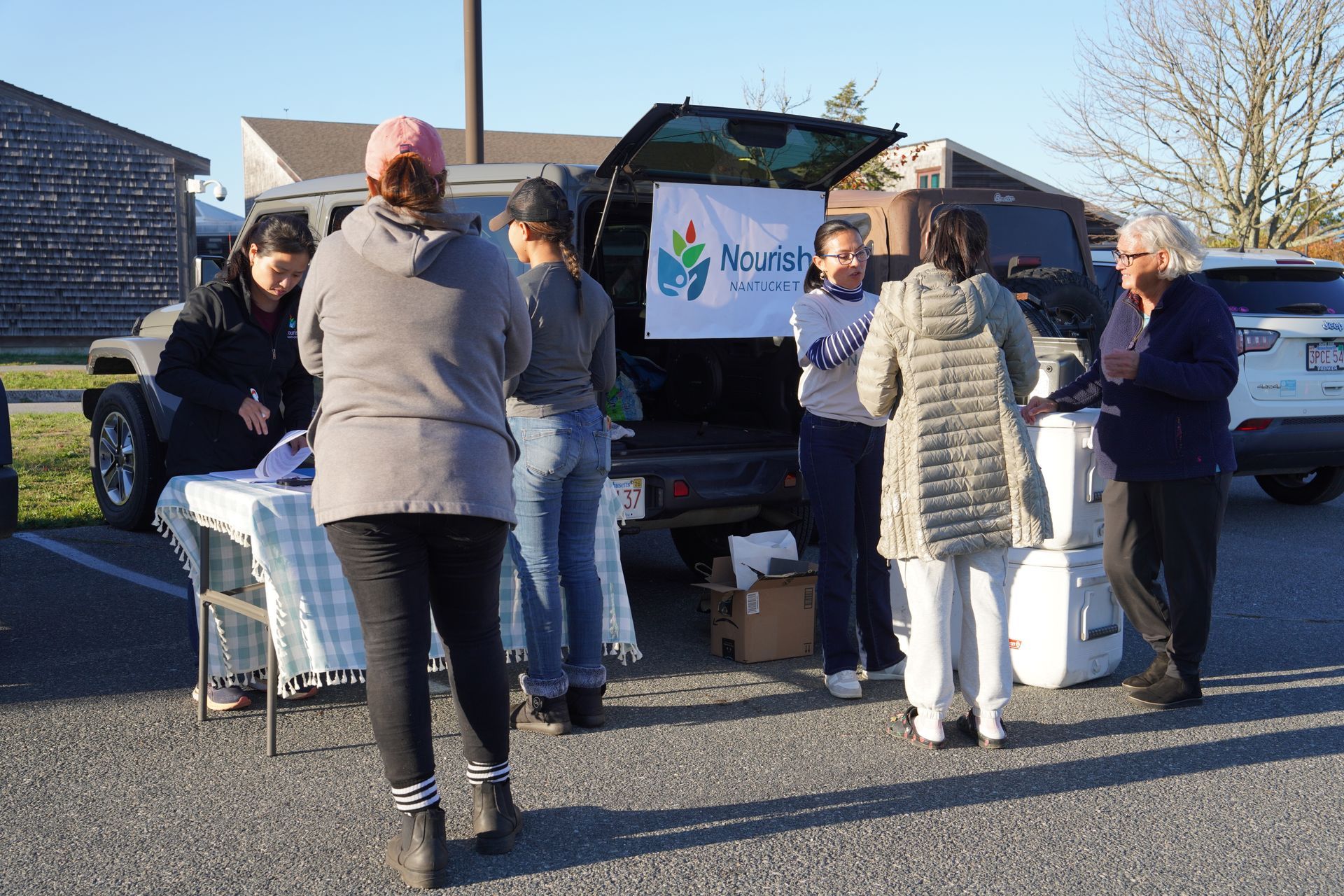
- Volunteers delivering prepared meals
In what became a highly charged story about the Food Pantry losing its lease, the search for a new home became a cause célèbres, given that the loss of services through the food pantry could have been catastrophic to the food security network.
“The collaboration between the Land Bank and Nourish Nantucket in arriving at a joint solution to a pressing problem was an extraordinary example of the value of teamwork on Nantucket,” said Bruce A. Percelay, creator of Nourish Nantucket and chairman of its Advisory Council.
In a pivot from its conventional role as a conservation organization, the Land Bank entered into the food security arena as a result of its search for a facility to process deer meat that could be used as a high-quality protein for those lacking in balanced nutrition. The Land Bank was also looking for a place that could process other local meat products, to provide farmers with a sustainable butchery for locally raised livestock and poultry. As it happened, the Land Bank’s search coincided with Nourish Nantucket’s effort to find a home for both the Pantry and Nourish Nantucket itself. “This is the ideal collaboration we were looking for so we can work on agriculture, assisting with food insecurity and supporting local food systems,” Land Bank Executive Director Rachael Freeman said.
The new facility on Boynton Lane not only provides more storage space, it also gives participants more privacy compared to the downtown building and opens the door for a host of programs that advocates say can fill in the gaps when it comes to feeding islanders. According to Nourish Nantucket, filling those gaps—such as medically tailored food, deliveries and nutritious options—is crucial. “We describe the Food Pantry as the traditional backbone of the food security system, but the system needs to be a lot more than that, and that’s why we were looking for a space that could accommodate more programs than just a traditional food pantry,” said Brooke Mohr, Nourish Nantucket board president.
Among the new programs that will operate out of the Boynton Lane facility is a food rescue program to repurpose unused food from restaurants, hotels, inns and rentals. The venison processing facility, which will be staffed by the Land Bank, allows hunters to donate surplus deer to feed islanders in need while culling Nantucket’s overpopulation of deer—a state initiative currently not in existence on the island.
While food insecurity nationwide might be associated strictly with low-income earners, the problem on Nantucket has become so dire it now reaches a wide range of working people, including teachers, town employees and members of the Coast Guard. Even with decent pay, the combination of high rent, staggering home costs and a lack of affordable housing options has made food and basic supplies unaffordable to some islanders. “On Nantucket, you can make six figures and still be food insecure,” Browers said.